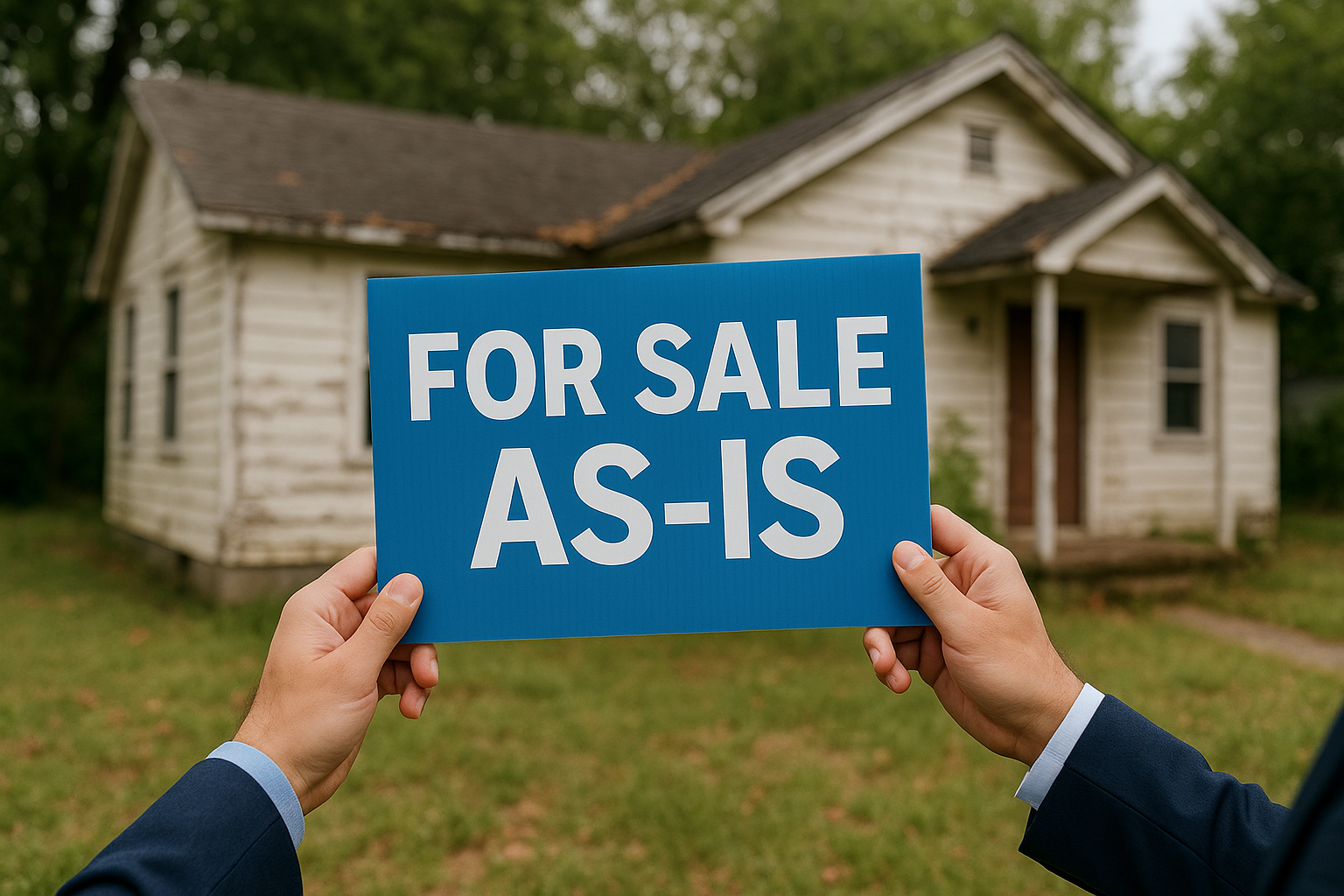
What “As-Is” Means and Why It Matters
When a property is sold “as-is,” the seller is indicating they won’t make repairs or improvements before closing. That can speed up a sale, but it also changes buyer expectations. Marketing as-is homes requires clarity, accurate presentation, and a strategy that targets buyers who accept — or profit from — properties sold in this condition.
Prepare the Property (Without Major Renovations)
Clean and Declutter
You don’t need a full remodel, but a thorough cleaning and removing personal clutter makes a big difference. A cleaner home photographs better and helps buyers visualize potential.
Make Low-Cost Fixes
Handle inexpensive but impactful items: replace burned-out light bulbs, tighten cabinet hardware, repair broken window latches, or fix leaky faucets. Small fixes reduce objections without committing to costly repairs.
Document Condition
Prepare a clear list of known issues and the age of major systems (roof, HVAC, plumbing). Being transparent builds trust and speeds due diligence.
Create an Accurate, Compelling Listing
Lead with Honesty
Start the listing description with a straightforward note that the home is being sold as-is. Honest language prevents wasted inquiries and attracts serious buyers.
Professional Photos and Virtual Tours
High-quality photos are essential, even for as-is homes. Invest in a pro photographer or good-quality smartphone images with proper lighting. Provide a virtual tour or walkthrough video to let remote investors or busy buyers assess the property quickly.
Highlight Potential and Key Features
Focus on the property’s strengths: lot size, layout, neighborhood amenities, original features, or income potential. Use bullet points to call out value-add opportunities (e.g., “Great candidate for cosmetic renovation and quick flip”).
Target the Right Buyers
Investors and Flippers
These buyers look for properties they can rehab and resell. Emphasize ROI indicators — comp values after rehab, neighborhood comps, and ease of access for contractors.
Owner-Occupants with Cash or Renovation Loans
Some buyers want a fixer-upper and have renovation loans (FHA 203(k), Fannie Mae HomeStyle). Mention financing options or that you’re open to buyers who plan to renovate after purchase.
Real Estate Agents and Wholesalers
Work with local agents familiar with as-is deals and wholesalers who have investor lists. Offer clear commissions and timely communication to keep agents motivated.
Use Multiple Marketing Channels
- MLS: Always list on the MLS with an accurate as-is note and strong photos.
- Signage: A clear “As-Is” or “Investor Special” sign can attract local investors.
- Social Media: Use short video walkthroughs and targeted ads aimed at house flippers and local investor groups.
- Email and Direct Mail: Send targeted campaigns to investor lists and area real estate professionals.
- Auctions or Investor Events: Consider an auction if time is critical; host broker opens to build immediate interest.
Pricing and Negotiation Strategies
Price for the Market, Not the Ideal
Set a realistic price that reflects condition and comparable sales after typical repairs. Overpricing to leave room for negotiation can stall interest.
Provide Repair Estimates
Offering ballpark repair costs or allowing buyers to obtain contractor bids during the inspection period makes negotiations smoother. Some sellers provide a credit instead of making repairs, which can be a helpful compromise.
Be Flexible on Closing Terms
Speed to close, buyer’s deposit size, and willingness to accommodate inspection windows are often more important than list price for investor buyers. Clarify which terms you can be flexible on to increase offers.
Legal and Disclosure Considerations
Even when selling as-is, sellers must comply with disclosure laws. Provide all known material facts, complete required state and local disclosure forms, and encourage buyers to conduct inspections. Clear documentation protects both parties and facilitates a smoother closing.
Work with Professionals
Partner with an experienced real estate agent who understands as-is transactions, or consult an attorney if the property has title issues, probate matters, or unresolved code violations. Reliable contractors, appraisers, and home inspectors can also help set accurate expectations.
Conclusion
Marketing as-is homes is about honesty, targeted outreach, and smart presentation. With clear disclosures, professional photos, realistic pricing, and strategic outreach to investors and renovation-ready buyers, you can sell faster and with fewer surprises. Focus on highlighting potential and making the process easy for buyers who specialize in as-is properties.