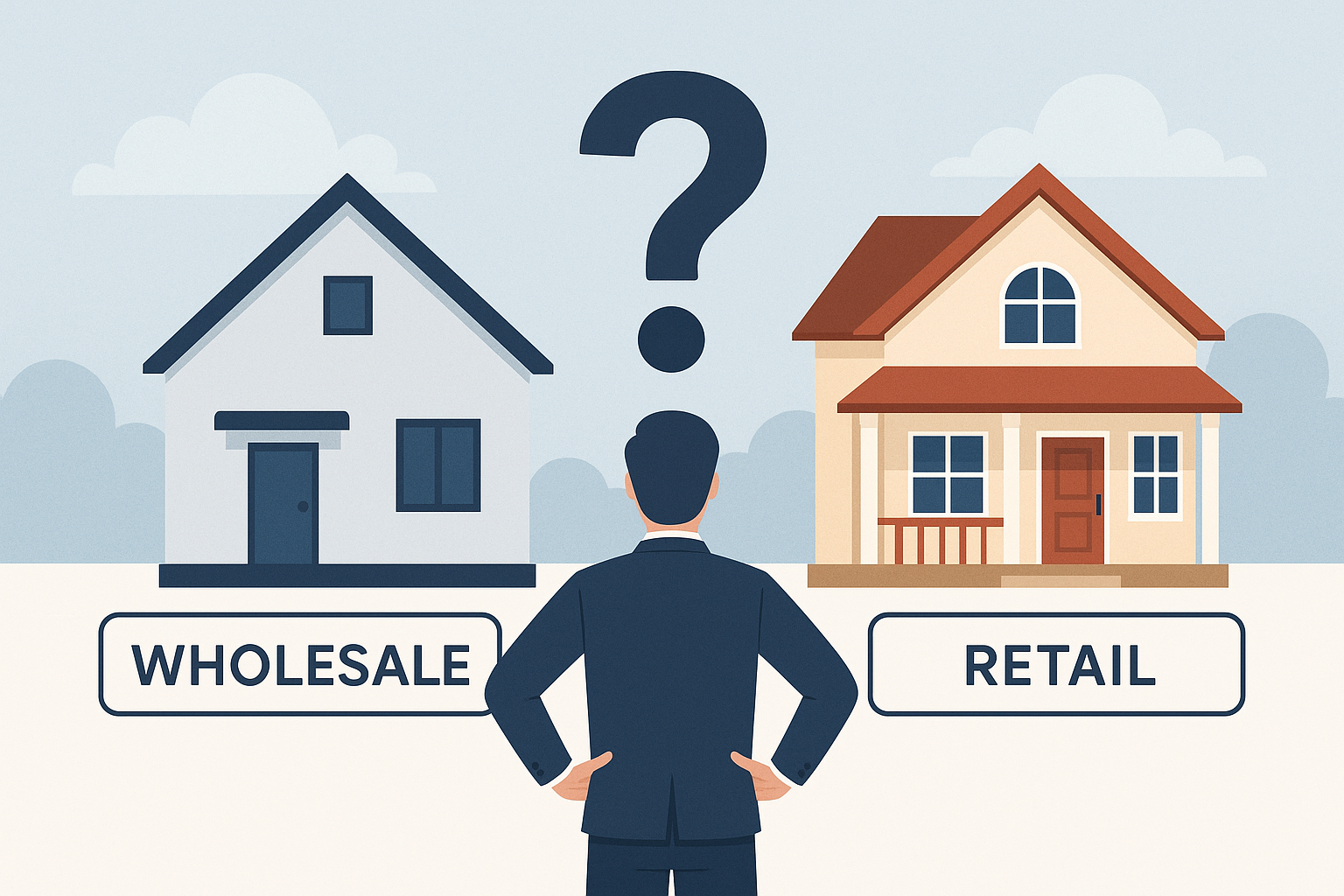
Wholesale vs Retail Home Buying: A Clear Comparison
When selling or buying a house, the terms wholesale and retail describe two very different approaches. Understanding how each works helps sellers choose the best method for their goals and helps investors or buyers know what to expect. This guide breaks down the differences, pros and cons, and practical tips to decide which path is right for you.
What Is Wholesale Home Buying?
How It Works
Wholesale home buying typically involves an investor or wholesaler contracting a property at a below-market price — often because the seller needs a fast sale or the home needs significant repairs. The wholesaler then assigns that contract to an end buyer (usually another investor) for a fee, or closes and resells the property quickly.
Who Is Involved
Key players include the motivated seller, the wholesaler (or middleman), and the final buyer, who is usually an investor or house flipper. Traditional real estate agents may or may not be involved, depending on local regulations and deal structure.
Typical Timeline
Wholesale deals move fast. Contracts are often signed and assigned within days to a few weeks. Speed is a key benefit for sellers who need cash quickly or want to avoid lengthy repairs and listing processes.
What Is Retail Home Buying?
How It Works
Retail home buying is the conventional market process where a seller lists the property through an agent or for sale by owner, markets it to the public, accepts offers, and closes with a buyer who intends to live in or invest in the property long term. This route aims to achieve market value through exposure and negotiation.
Who Is Involved
Participants include the seller, listing agent, buyer, buyer’s agent, lenders, and sometimes inspectors and appraisers. The process is more transparent, with public listings and open market competition.
Typical Timeline
Retail sales generally take longer — often 30 to 90 days or more depending on market conditions, financing, inspections, and contingencies. This timeline can be extended if the home requires repairs or staging for better offers.
Key Differences Between Wholesale and Retail
Price and Profit Margins
Wholesale deals usually result in lower sale prices for sellers because the buyer is often an investor looking for a discount. Retail sales aim for higher prices by reaching a broader buyer pool. For buyers, wholesaling can offer higher profit potential if they can renovate and resell.
Speed and Process
Wholesale is faster and simpler, with fewer showings and less marketing. Retail involves listings, open houses, and longer negotiations, which can yield a higher sale price but requires more time and effort.
Risk and Due Diligence
Wholesale buyers often buy as-is and assume more risk related to repairs, liens, or title issues. Retail buyers and sellers typically use inspections and contingencies, giving both sides more protection but introducing potential delays.
Market Impact and Transparency
Retail transactions are public and contribute to comparable sales data. Wholesale deals can be private and may have limited public record, which affects market transparency and appraisal values in some areas.
Pros and Cons
Wholesale Pros
- Rapid closing and immediate cash for sellers
- Fewer repairs or staging required
- Opportunities for investors to buy below market value
Wholesale Cons
- Sellers often receive below-market offers
- Potential for less transparency and fewer consumer protections
- Investors take on repair and market risk
Retail Pros
- Higher sale price potential through market exposure
- Stronger negotiation leverage with multiple buyers
- More protections via inspections, contingencies, and appraisals
Retail Cons
- Longer timeline and more upfront costs (repairs, staging, commissions)
- Uncertainty about how long the property will stay on market
How to Choose Between Wholesale and Retail
For Sellers
Ask yourself: Do you need speed and convenience, or do you want top dollar and can wait? If you face foreclosure, a major life change, or time-sensitive financial pressure, wholesale might be the best option. If you can invest in repairs, market the property, and wait for offers, retail usually yields a higher price.
For Buyers and Investors
Wholesale deals can offer higher margins but come with more risk and a need for quick decisions. Retail buyers looking for a home to live in should value thorough inspections and contingencies despite a longer timeline.
Practical Tips
- Get multiple offers if possible to compare wholesale versus retail outcomes.
- Always run title searches and basic due diligence, even for quick wholesale sales.
- Consult a local real estate attorney or agent to understand laws around assignment contracts and wholesaling in your area.
- For sellers, calculate net proceeds after fees, repairs, and closing costs to make an informed choice.
Conclusion
Wholesale and retail home buying each serve different needs. Wholesale favors speed and convenience at the cost of lower sale prices, while retail prioritizes market exposure and higher returns but requires time and preparation. Evaluate your timeline, financial goals, and risk tolerance to decide which route fits your situation best.