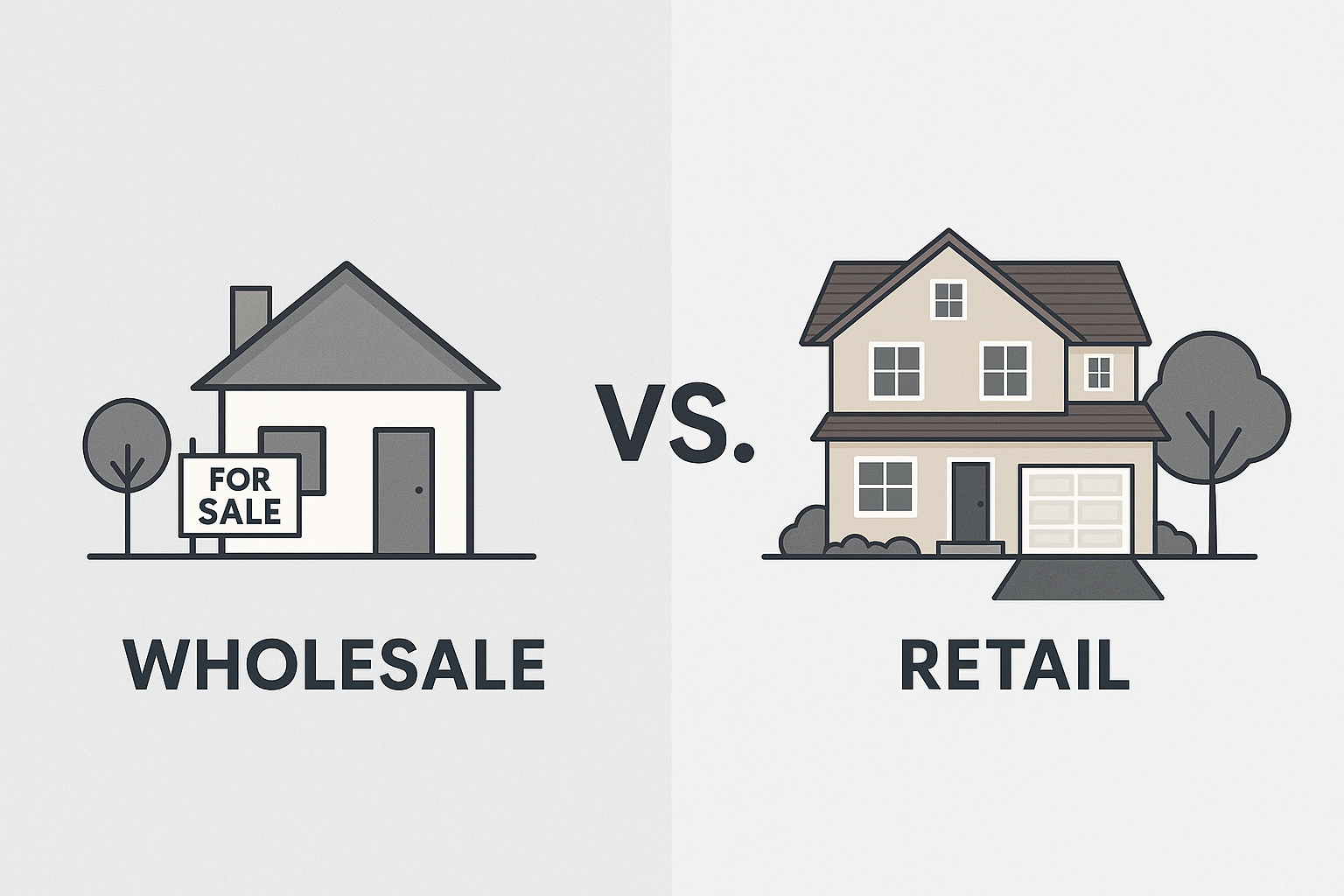
When you shop for a home, you’ll usually encounter two broad paths: buying through the traditional retail market or purchasing a property through a real estate wholesaler. Both can lead to homeownership, but the way you find, evaluate, and purchase a property can be very different. Understanding those differences can help you choose an approach that fits your budget, timeline, and comfort with risk.
What Is Retail Home Buying?
Retail home buying is the conventional process most buyers know. A home is listed for sale—often on the multiple listing service (MLS)—and a buyer makes an offer through a real estate agent or directly to the seller. The seller may accept, reject, or negotiate the offer.
Retail properties are typically marketed to a wide pool of buyers. They may be move-in ready, though some need repairs. Buyers commonly use a mortgage, and the transaction includes familiar steps such as inspections, an appraisal, title review, and closing.
Advantages of buying retail
- More property information: Listings often include photos, disclosures, and details about the home and neighborhood.
- Financing options: Buyers can generally use conventional, government-backed, or other mortgage programs, subject to lender approval.
- Time to evaluate: Inspection and financing contingencies may provide opportunities to review the property and, where allowed by the contract, renegotiate or walk away.
- Broad selection: Retail listings cover a range of home styles, locations, and conditions.
Potential drawbacks of buying retail
Popular homes may attract multiple offers, creating competition and pushing prices upward. Buyers may also face a longer search if inventory is limited. A listed price is not necessarily the final price, and the cost of repairs, insurance, taxes, and closing should be considered alongside the purchase price.
What Is Wholesale Home Buying?
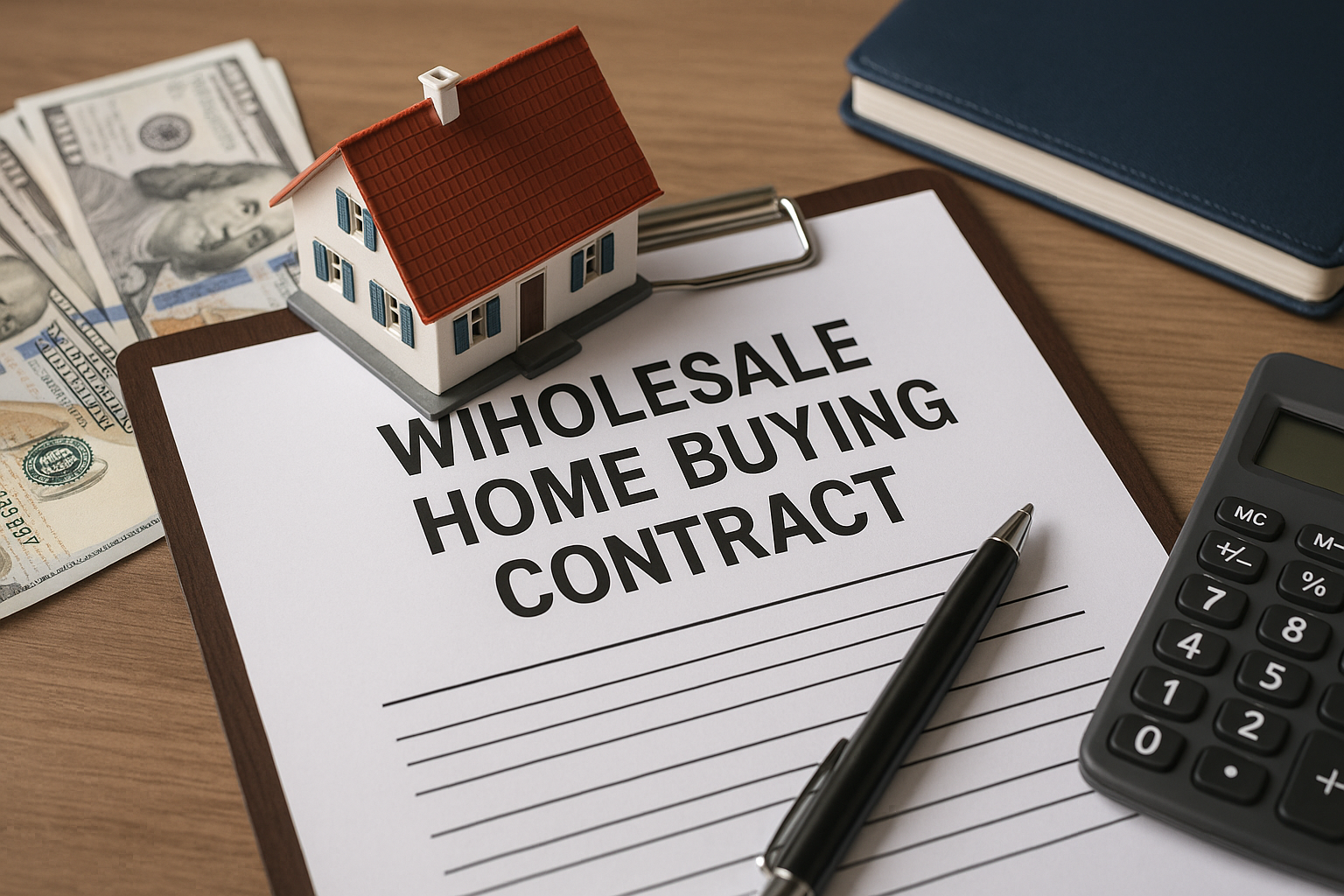
In a typical real estate wholesale transaction, an investor—called the wholesaler—contracts with a property owner to buy a home, then transfers or assigns their purchase-contract rights to another buyer for a fee. The end buyer generally pays the wholesaler’s fee as part of the transaction and completes the purchase from the seller, depending on the contract and local law.
In some cases, the wholesaler buys the property and resells it in a separate transaction, often called a double closing. The exact structure varies. A wholesale deal is not simply a home sold at a guaranteed discount: the buyer must evaluate the property, contract terms, fees, and likely repair costs independently.
Advantages of buying wholesale
- Potential for a lower price: Some properties are priced below comparable retail homes because they need work or the seller wants a quick, straightforward transaction.
- Access to off-market opportunities: Wholesalers may find properties that are not advertised on public listing sites.
- Speed: A motivated seller and a buyer ready to act can sometimes move quickly, although title, financing, and closing requirements still take time.
- Useful for renovation-minded buyers: Buyers who can assess repair needs may find opportunities that do not suit someone seeking a turnkey home.
Risks and limitations of buying wholesale
Wholesale properties are often sold as-is, and the buyer may have less time or fewer opportunities to investigate the home. There may be undisclosed defects, major repair costs, title issues, or restrictions in the contract. Assignment fees and other transaction costs can also change the apparent bargain. Some deals may not qualify for standard mortgage financing, especially when the property is in poor condition or the closing timeline is short.
Wholesaling rules differ by state and locality. Requirements may apply to licensing, marketing, disclosures, contract assignment, or how the wholesaler describes their role. Confirm that the transaction complies with local law, and have a qualified real estate attorney review unfamiliar documents when appropriate.
Wholesale vs. Retail: Key Differences
The biggest differences are how the property is marketed, how the contract is structured, and how much due diligence the buyer can complete before committing.
- Price: Retail pricing generally reflects the open market. Wholesale pricing may be lower, but the buyer must factor in fees and repairs.
- Condition: Retail homes range from renovated to fixer-upper. Wholesale homes are often offered in their current condition.
- Financing: Retail purchases are commonly compatible with mortgages. Wholesale deals may require cash, renovation financing, or a lender comfortable with the property and contract structure.
- Competition: Retail homes can attract several competing buyers. Wholesale deals may have less public competition but often require a fast decision.
- Due diligence: Retail contracts may allow standard inspection and financing periods. Wholesale contracts can have tighter deadlines or fewer protections, so read every term carefully.
How to Choose the Right Buying Route
Retail may be a better fit if…
You want a wider selection, need mortgage financing, prefer a familiar purchase process, or want time to compare homes and arrange inspections. First-time buyers often appreciate the structure and professional support available through a retail transaction.
Wholesale may be a better fit if…
You have experience evaluating properties, can estimate renovation costs, have flexible financing or cash, and are comfortable moving quickly. It can also suit buyers who are open to repairs and understand that an attractive asking price does not guarantee a profitable or affordable purchase.
Whichever route you choose, compare the full cost—not just the advertised price. Include inspections, repairs, closing costs, financing, insurance, taxes, and any assignment or transaction fees. Verify ownership and title, review deadlines and contingencies, and avoid signing until you understand your obligations. A real estate agent, inspector, lender, title professional, or attorney can help answer questions specific to your situation.
Conclusion
Retail buying offers a familiar process and broader access to financing, while wholesale buying may provide access to off-market homes and potential value for prepared buyers. Neither path is automatically cheaper or safer. Choose the one that fits your resources, experience, and risk tolerance—and verify the details before you commit.