Introduction
First impressions matter enormously in real estate. Home staging is the process of preparing and presenting your property so buyers can instantly picture themselves living there. Done well, staging can help your home sell faster and for a higher price, by highlighting its best features and minimizing any drawbacks. The good news: you don’t need a huge budget or a professional designer to make a big impact. With a clear plan and a bit of effort, you can transform your space into a buyer magnet.
Why Staging Matters
Staging isn’t about hiding flaws or pretending your home is something it’s not. It’s about guiding a buyer’s eye so they notice the right things first. Most buyers begin their search online, and staged homes tend to look better in photos, attract more showings, and stand out in a crowded market.
A well-staged home can:
- Help buyers connect emotionally with the space
- Make rooms feel larger, brighter, and more functional
- Highlight architectural features like fireplaces, windows, and ceiling height
- Reduce the impression of “work to be done” before move-in
- Encourage stronger offers and fewer lowball negotiations
Ultimately, staging makes it easier for buyers to say “yes” because they’re not distracted by clutter, bold decor, or maintenance issues.
Start with a Clean Slate
Deep Clean Every Room
A clean home sends a powerful message that the property has been well cared for. Before you think about accessories or styling, do a top-to-bottom deep clean. Pay special attention to areas where buyers tend to look closely: kitchens, bathrooms, entryways, and flooring.
Key cleaning tasks include:
- Scrubbing kitchen and bathroom surfaces, grout, and fixtures until they shine
- Washing windows, inside and out, to maximize natural light
- Cleaning baseboards, door frames, and light switches
- Shampooing carpets and mopping hard floors
- Dusting ceiling fans, vents, and blinds
If time is tight, consider hiring professional cleaners for a one-time deep clean. It’s often one of the best returns on investment you can make when preparing to sell.
Declutter and Depersonalize
Clutter makes rooms feel smaller and distracts buyers from your home’s features. Depersonalizing helps buyers envision their own lives there instead of feeling like a guest in someone else’s home.
Focus on:
- Reducing items on countertops, shelves, and dressers to just a few attractive pieces
- Removing most family photos, kids’ artwork, and personal collections
- Clearing off refrigerator doors and bulletin boards
- Editing closets and storage areas so they look spacious (aim for about 50% full)
- Stowing away pet items, excessive toys, and hobby gear
Pack items you don’t need day-to-day in labeled boxes and store them neatly in a garage, basement corner, or off-site storage if possible. You’ll have a head start on moving, and your home will feel more open and calm.
Highlight Key Rooms
Living Room
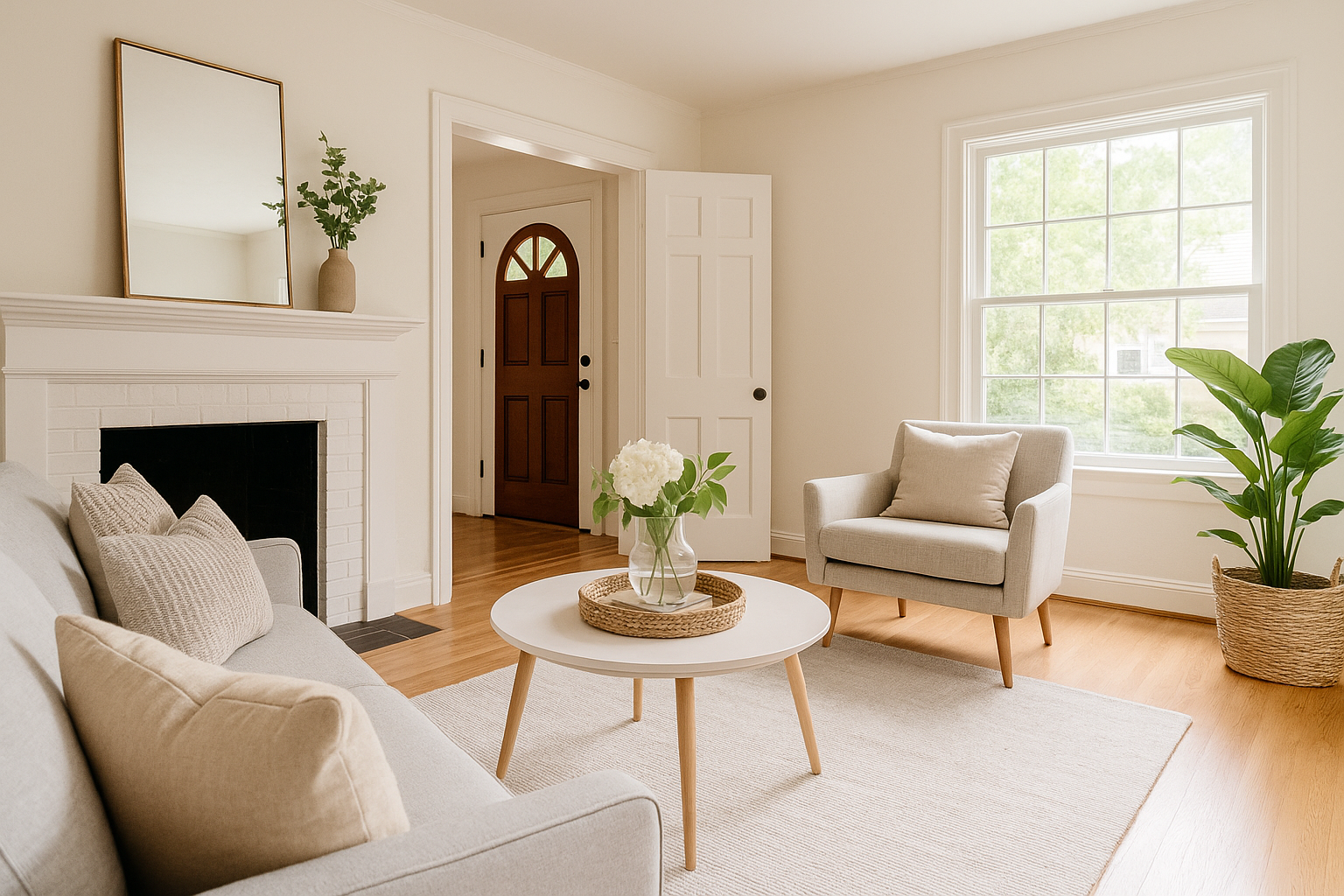
The living room is often the heart of the home, and buyers pay close attention to how it feels and functions. The goal is to create a welcoming, comfortable space with a clear focal point.
Tips for staging your living room:
- Arrange furniture to highlight the room’s best feature (a fireplace, large window, or built-in shelving)
- Pull furniture slightly away from walls to create conversation areas
- Use neutral or soft-colored throw pillows and blankets to add warmth
- Remove oversized or extra furniture pieces that make the room feel cramped
- Add a simple coffee table vignette: a tray, a few books, and a small plant
Kitchen
Buyers place a huge value on kitchens. Even if you’re not doing a remodel, staging can make this space feel fresh and move-in ready.
Focus on:
- Clearing counters of almost everything except a few stylish, functional items (like a bowl of fruit or a coffee station)
- Organizing cabinets and pantries so they look spacious and tidy
- Replacing dated hardware (knobs and pulls) for an inexpensive update
- Adding under-cabinet lighting strips if the room is dim
- Using neutral dish towels and a new, clean kitchen mat
Bedrooms
Bedrooms should feel restful and spacious. Aim for a hotel-like atmosphere: clean, comfortable, and uncluttered.
For primary and guest bedrooms:
- Use neutral bedding with layered pillows and a throw for a finished look
- Ensure the bed is the focal point and is centered if space allows
- Remove bulky dressers or desks that crowd the room
- Clear nightstands except for a lamp, a small book, or a simple decor item
- Make sure closets are organized and not overstuffed
Enhance Curb Appeal
Exterior Cleaning and Repairs
Buyers form an opinion before they even step through the front door. Strong curb appeal sets the tone for the entire showing.
Simple exterior improvements include:
- Power-washing siding, walkways, and driveways
- Cleaning or repainting the front door for a fresh, inviting look
- Replacing worn-out house numbers, mailbox, or exterior light fixtures
- Repairing loose railings, cracked steps, or damaged screens
Landscaping and Entryway
Your front yard and entry should feel neat and welcoming, not high-maintenance.
Consider:
- Trimming bushes, edging lawns, and removing weeds
- Adding fresh mulch and a few seasonal plants or flowers
- Setting out a clean, new doormat and perhaps a simple wreath
- Ensuring the front porch is clutter-free with just a chair or two and a small table if space allows
Even for condos or apartments, tidying the doorway, adding a plant, and ensuring good lighting can make a strong first impression.
Use Light, Color, and Accessories
Maximize Natural Light
Bright spaces feel larger and more inviting. Make the most of natural light and supplement with smart artificial lighting.
Strategies include:
- Opening curtains and blinds fully for showings and photos
- Using light, airy window treatments instead of heavy drapes
- Adding floor or table lamps to dark corners
- Ensuring all light bulbs match in color temperature (soft white or daylight) and are functioning
Neutral Colors and Simple Decor
Neutral colors appeal to the widest range of buyers and make rooms feel clean and spacious.
Focus on:
- Touching up scuffed walls or repainting bold rooms in soft neutrals (grays, beiges, or warm whites)
- Using simple, modern artwork that complements the room’s colors
- Adding greenery with a few real or high-quality faux plants
- Keeping accessories minimal and cohesive across the home
Remember, less is more. The goal is to create a calm backdrop where buyers can imagine adding their own style.
Final Touches Before Showings
Appeal to the Senses
Small sensory details can subtly influence how buyers feel in your home.
Before a showing:
- Open windows briefly to air out the space (weather permitting)
- Use mild, neutral scents—avoid strong perfumes or heavy air fresheners
- Set the thermostat to a comfortable temperature
- Turn on soft lighting and open blinds for a warm, welcoming glow
Keep It Showing-Ready
Once your home is staged, aim to maintain it with simple daily habits so you can accommodate short-notice showings.
Helpful routines:
- Make beds every morning and put clothes directly into hampers
- Wipe down kitchen and bathroom surfaces daily
- Keep a laundry basket handy to quickly collect stray items before showings
- Take out trash regularly and manage pet odors
Conclusion
Staging a home for sale is about presenting your property in its best possible light, not creating a perfect, untouchable showpiece. By decluttering, cleaning thoroughly, highlighting key rooms, boosting curb appeal, and paying attention to light and simple decor, you can significantly improve how buyers perceive your home. With a bit of planning and consistent effort, your staged home will stand out, feel inviting, and help potential buyers picture their next chapter there.